Structural Engineering Courses
Structural engineering courses can help you learn load analysis, material properties, design principles, and construction methods. You can build skills in seismic design, structural dynamics, and the use of finite element analysis for modeling. Many courses introduce tools like AutoCAD for drafting, SAP2000 for structural analysis, and Revit for building information modeling, showing how these skills are applied in real projects to ensure safety and efficiency in construction.
Popular Structural Engineering Courses and Certifications
 Status: Free Trial
L&T EduTech
Skills you'll gain: Architectural Drawing, Blueprint Reading, Structural Engineering, Structural Analysis, Engineering Drawings, Building Design, Engineering Documentation, Architectural Engineering, Building Codes, Civil Engineering, Construction, Engineering Practices, Engineering Calculations
 Status: Free Trial
Dartmouth College
Skills you'll gain: Structural Analysis, Structural Engineering, Building Design, Civil Engineering, Vibrations, Architectural Engineering, Mechanical Engineering, Construction, SketchUp (3D Modeling Software), Mechanics, Engineering Analysis, Engineering Calculations, Mathematical Modeling, Prototyping, Engineering Design Process, Experimentation, Materials science, 3D Modeling, Applied Mathematics
 Status: Free Trial
L&T EduTech
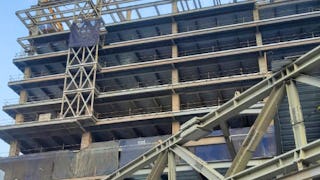
Skills you'll gain: Construction Inspection, Structural Analysis, Structural Engineering, Building Design, Construction, Building Codes, Architectural Drawing, Industrial Design, Commercial Construction, Architectural Engineering, Engineering Drawings, Civil Engineering, Computer-Aided Design, Failure Analysis, Technical Drawing, Engineering Analysis, Engineering Calculations, Engineering Design Process, Engineering Software, Sustainable Engineering
 Status: Preview
Georgia Institute of Technology
Skills you'll gain: Engineering Analysis, Mechanics, Torque (Physics), Engineering Calculations, Mechanical Engineering, Engineering, Civil Engineering, Structural Analysis, Applied Mathematics, Trigonometry
 Status: Preview
National Taiwan University
Skills you'll gain: Building Information Modeling, Engineering Documentation, Data Modeling, 3D Modeling, Computer-Aided Design, Construction, Construction Management, Civil Engineering, Mechanical Engineering
 Status: Free Trial
Vanderbilt University
Skills you'll gain: Prompt Engineering, ChatGPT, Prompt Patterns, LLM Application, Productivity, OpenAI, Generative AI, Artificial Intelligence, Large Language Modeling, Artificial Intelligence and Machine Learning (AI/ML), Creative Thinking, Creative Problem-Solving, Problem Solving
What brings you to Coursera today?

Skills you'll gain: Finite Element Methods, Engineering Analysis, Simulation and Simulation Software, Engineering Calculations, Mathematical Modeling, Structural Analysis
 Status: Free Trial
Columbia University
Skills you'll gain: Project Schedules, Construction Management, Construction Estimating, Project Finance, Cost Estimation, Punch Work, Construction, Project Risk Management, Bidding, Building Information Modeling, Scheduling, Cost Control, Environment Health And Safety, Project Closure, Lean Methodologies, Timelines, Real Estate, Finance, Business Transformation, Innovation
 Status: Free Trial
Skills you'll gain: Prompt Engineering, Prompt Patterns, ChatGPT, Generative AI
 Status: Free Trial
Rice University
Skills you'll gain: Project Scoping, Communication Planning, Cost Management, Scope Management, Project Estimation, Project Schedules, Earned Value Management, Scheduling, Team Management, Quality Assurance, Stakeholder Management, Work Breakdown Structure, Risk Management, Organizational Structure, Procurement, Project Risk Management, Project Documentation, Requirements Management, Project Management, Planning
 Status: Preview
Georgia Institute of Technology
Skills you'll gain: Structural Analysis, Structural Engineering, Engineering Analysis, Mechanical Engineering, Mechanics, Engineering
 Status: Preview
Georgia Institute of Technology
Skills you'll gain: Structural Analysis, Mechanical Engineering, Failure Analysis, Engineering Analysis, Mechanics, Materials science, Engineering Calculations, Civil Engineering, Mathematical Modeling, Trigonometry
In summary, here are 10 of our most popular structural engineering courses
- Design Basics of RCC Buildings: L&T EduTech
- The Engineering of Structures Around Us: Dartmouth College
- Steel Multi Storey Building - System Design: L&T EduTech
- Introduction to Engineering Mechanics: Georgia Institute of Technology
- BIM Fundamentals for Engineers: National Taiwan University
- Prompt Engineering for ChatGPT: Vanderbilt University
- FEM - Linear, Nonlinear Analysis & Post-Processing: Coursera
- Construction Management: Columbia University
- Generative AI: Prompt Engineering Basics: IBM
- Engineering Project Management: Rice University










