Linear Algebra Courses
Linear Algebra courses can help you learn vector spaces, matrix operations, eigenvalues, and linear transformations. You can build skills in solving systems of equations, performing dimensionality reduction, and applying concepts to data analysis and machine learning. Many courses introduce tools such as MATLAB, Python libraries like NumPy, and software for computational mathematics, that support implementing algorithms and visualizing data in various applications, including artificial intelligence and AI-driven models.
Popular Linear Algebra Courses and Certifications
 Status: Free Trial
Johns Hopkins University
Skills you'll gain: Linear Algebra, Algebra, Applied Mathematics, Advanced Mathematics, Artificial Intelligence and Machine Learning (AI/ML), Mathematical Modeling, Engineering Analysis, Mathematical Theory & Analysis, Numerical Analysis, Geometry, Data Transformation, Applied Machine Learning, Dimensionality Reduction, Markov Model, Probability
 Status: Free Trial
Imperial College London
Skills you'll gain: Linear Algebra, NumPy, Applied Mathematics, Machine Learning Algorithms, Jupyter, Algorithms, Python Programming
 Status: Free Trial
DeepLearning.AI
Skills you'll gain: Linear Algebra, NumPy, Dimensionality Reduction, Data Preprocessing, Machine Learning Methods, Advanced Mathematics, Data Manipulation, Applied Mathematics, Mathematical Modeling, Machine Learning, Python Programming, Algebra

The University of Sydney
Skills you'll gain: Linear Algebra, Markov Model, Geometry, Arithmetic, Algebra, General Mathematics, Advanced Mathematics, Probability, Mathematics and Mathematical Modeling, Mathematical Theory & Analysis, Mathematical Modeling, Applied Mathematics, Statistical Methods, Vector Databases, Engineering Analysis, Computational Logic
 Status: Free Trial
Johns Hopkins University
Skills you'll gain: Linear Algebra, Algebra, Advanced Mathematics, Mathematical Modeling, Engineering Analysis, Applied Mathematics, Mathematical Theory & Analysis, Geometry
 Status: Free Trial
The Hong Kong University of Science and Technology
Skills you'll gain: Linear Algebra, Engineering Calculations, Algebra, Engineering Analysis, General Mathematics, Advanced Mathematics, Applied Mathematics, Arithmetic, Computational Logic
What brings you to Coursera today?
 Status: Free Trial
Imperial College London
Skills you'll gain: Linear Algebra, Dimensionality Reduction, NumPy, Regression Analysis, Calculus, Applied Mathematics, Data Preprocessing, Unsupervised Learning, Feature Engineering, Machine Learning Algorithms, Jupyter, Advanced Mathematics, Statistics, Artificial Neural Networks, Algorithms, Mathematical Modeling, Python Programming, Derivatives
 Status: Free Trial
Johns Hopkins University
Skills you'll gain: Linear Algebra, Applied Mathematics, Algebra, Advanced Mathematics, Geometry, Data Transformation, Applied Machine Learning, Dimensionality Reduction, Markov Model, Probability
 Status: NewStatus: Free Trial
Birla Institute of Technology & Science, Pilani
Skills you'll gain: Linear Algebra, Numerical Analysis, Artificial Intelligence and Machine Learning (AI/ML), Applied Mathematics, Data Analysis, Geometry, Machine Learning Algorithms, Machine Learning, Dimensionality Reduction, Artificial Neural Networks, Data Manipulation
 Status: Free Trial
DeepLearning.AI
Skills you'll gain: Descriptive Statistics, Bayesian Statistics, Statistical Hypothesis Testing, Probability & Statistics, Sampling (Statistics), Probability Distribution, Linear Algebra, Statistical Inference, A/B Testing, Statistical Analysis, Applied Mathematics, NumPy, Probability, Calculus, Dimensionality Reduction, Numerical Analysis, Machine Learning Algorithms, Data Preprocessing, Machine Learning, Machine Learning Methods
 Status: Free Trial
Johns Hopkins University
Skills you'll gain: Algebra, Mathematical Modeling, Graphing, Arithmetic, Advanced Mathematics, Applied Mathematics, General Mathematics, Analytical Skills, Probability & Statistics, Geometry

 Status: NewStatus: Free Trial
University of Pittsburgh
Skills you'll gain: NumPy, Matplotlib, Linear Algebra, Pandas (Python Package), Data Manipulation, Applied Mathematics, Data Visualization, Python Programming, Data Analysis, Data Science, Regression Analysis, Data Visualization Software, Mathematics and Mathematical Modeling, Probability & Statistics, Statistics, Numerical Analysis, Mathematical Modeling, Machine Learning, Computational Logic, Logical Reasoning
What brings you to Coursera today?
Searches related to linear algebra
In summary, here are 10 of our most popular linear algebra courses
- Linear Algebra from Elementary to Advanced: Johns Hopkins University
- Mathematics for Machine Learning: Linear Algebra: Imperial College London
- Linear Algebra for Machine Learning and Data Science: DeepLearning.AI
- Introduction to Linear Algebra: The University of Sydney
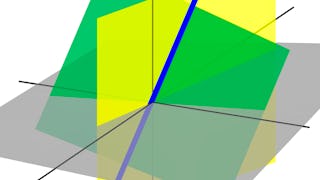
- Linear Algebra: Linear Systems and Matrix Equations: Johns Hopkins University
- Matrix Algebra for Engineers: The Hong Kong University of Science and Technology
- Mathematics for Machine Learning: Imperial College London
- Linear Algebra: Matrix Algebra, Determinants, & Eigenvectors: Johns Hopkins University
- Linear Algebra for Machine Learning & AI: Birla Institute of Technology & Science, Pilani
- Mathematics for Machine Learning and Data Science: DeepLearning.AI










